Buy morganpsychology.eu ?
We are moving the project
morganpsychology.eu .
Are you interested in purchasing the domain
morganpsychology.eu ?
domain@kv-gmbh.de · 0541-91531010
Buy morganpsychology.eu ?
How can one calculate the sine without using the sine function?
One way to calculate the sine without using the sine function is to use the Taylor series expansion of the sine function. The Taylor series for sine is: sin(x) = x - (x^3/3!) + (x^5/5!) - (x^7/7!) + ... By using this series, one can approximate the value of sine for a given angle by plugging in the angle into the series and summing up the terms to a desired level of precision. Another method is to use the unit circle and the properties of right-angled triangles to calculate the sine of an angle. By using the opposite and hypotenuse sides of a right-angled triangle, one can calculate the sine of the angle as the ratio of the opposite side to the hypotenuse. **
What are sine functions?
Sine functions are a type of trigonometric function that represent the ratio of the length of the side opposite a given angle in a right triangle to the length of the hypotenuse. In a sine function, the value of the function at a specific angle is equal to the y-coordinate of a point on the unit circle corresponding to that angle. Sine functions have a periodic nature, with a period of 2π, and are commonly used in mathematics and physics to model periodic phenomena such as sound waves and oscillations. **


Similar search terms for Sine
Top-Angebote
Products related to Sine:
-
Uplifted Goods Laser Therapy Watch For Circulation And Vascular Wellness whiteEnhance your daily wellness routine with this laser therapy watch designed to support healthy blood circulation and overall vascular health. Using gentle low level laser light, it provides a non invasive way to promote better blood flow and oxygen...928,50 $*Shipping: 0,00 $Secure redirect to the provider
-
Handpicked Choices Red Light Therapy Belt Infrared Therapy Wrap For Back Waist Muscle Recovery And Body Wellness blueExperience soothing comfort with this Red Light Therapy Belt, designed to help you relax after long days, intense workouts, or everyday physical strain. Combining 660nm red light and 850nm nearinfrared light, it offers a convenient, handsfree...109,97 $*Shipping: 0,00 $Secure redirect to the provider
-
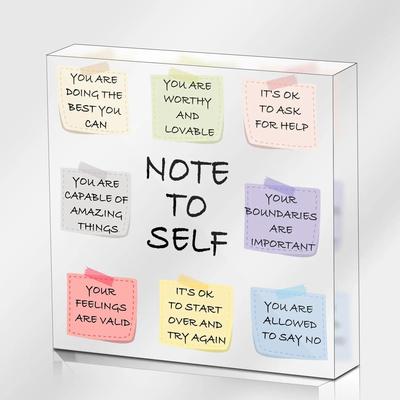
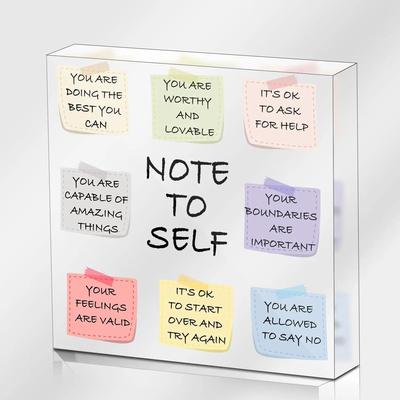
Uplift Essentials Mental Health & Psychology Motivational Sign Inspirational Modern Decor For Counseling & Classroom Corners Mental Health & Psychology Motivational Sign Inspirational Modern Decor For Counseling & Classroom Corners"Synchronize your sanctuary with the highdefinition, highvibration energy of our Psychology Motivational Decoration. Featuring a sophisticated ""mindfulminimalist"" silhouette, this professional plaque is designed to bring a ""calmluxe"" energy to your..."59,97 $*Shipping: 0,00 $Secure redirect to the provider
-
Uplifted Finds Mental Health Awareness Acrylic Sign Psychology Motivational Decor For Counseling, Classroom & Office Mental Health Awareness Acrylic Sign Psychology Motivational Decor For Counseling, Classroom & Office"Foster a culture of resilience and wellness with our Mental Health Gift. This premium psychology motivational decoration is the ultimate designer solution for creating a ""MindfulSanctuary"" or ""PositiveFocus"" atmosphere in any home. Featuring a..."71,97 $*Shipping: 0,00 $Secure redirect to the provider


-
Is the sine of alpha the same as the sine of gamma?
No, the sine of alpha is not necessarily the same as the sine of gamma. The sine function is based on the ratio of the length of the side opposite an angle to the length of the hypotenuse in a right triangle. Since alpha and gamma are different angles, they will have different ratios and therefore different sine values. **
-
What is a counseling psychologist?
A counseling psychologist is a mental health professional who specializes in providing therapy and counseling services to individuals, couples, families, and groups. They help clients address and overcome a wide range of emotional, behavioral, and psychological issues, such as anxiety, depression, relationship problems, and stress. Counseling psychologists use various therapeutic techniques to help clients gain insight, develop coping skills, and make positive changes in their lives. They work in a variety of settings, including private practice, mental health clinics, hospitals, and schools. **
-
How do you calculate the sine value of x in a sine function?
To calculate the sine value of x in a sine function, you can use a scientific calculator or mathematical software. Simply input the value of x into the sine function, denoted as sin(x), and the calculator or software will provide you with the corresponding sine value. Alternatively, you can use trigonometric identities or the unit circle to find the sine value of x manually. **
-
Why can the sine in the sine rule not be greater than 1?
The sine in the sine rule cannot be greater than 1 because the sine function has a maximum value of 1. The sine of an angle is defined as the ratio of the length of the opposite side to the length of the hypotenuse in a right-angled triangle. Since the length of the opposite side cannot be greater than the length of the hypotenuse, the sine of an angle cannot be greater than 1. This is a fundamental property of the sine function and is a result of the geometry of right-angled triangles. **
How do you determine the sine of alpha and the sine of beta?
The sine of an angle in a right-angled triangle is determined by dividing the length of the side opposite the angle by the length of the hypotenuse. So, to find the sine of alpha, you would divide the length of the side opposite alpha by the length of the hypotenuse. Similarly, to find the sine of beta, you would divide the length of the side opposite beta by the length of the hypotenuse. This can be represented by the formula: sin(alpha) = opposite/hypotenuse and sin(beta) = opposite/hypotenuse. **
What is the sine rule?
The sine rule, also known as the law of sines, is a trigonometric formula used to find the missing sides or angles of a triangle. It states that the ratio of the length of a side of a triangle to the sine of the angle opposite that side is constant for all three sides of the triangle. The formula is given as: a/sin(A) = b/sin(B) = c/sin(C), where a, b, and c are the sides of the triangle, and A, B, and C are the angles opposite those sides. The sine rule is particularly useful when dealing with non-right-angled triangles. **
Top-Angebote
Products related to Sine:
-
Uplifted Goods Laser Therapy Watch For Circulation And Vascular Wellness whiteEnhance your daily wellness routine with this laser therapy watch designed to support healthy blood circulation and overall vascular health. Using gentle low level laser light, it provides a non invasive way to promote better blood flow and oxygen...928,50 $*Shipping: 0,00 $Secure redirect to the provider
-
Handpicked Choices Red Light Therapy Belt Infrared Therapy Wrap For Back Waist Muscle Recovery And Body Wellness blueExperience soothing comfort with this Red Light Therapy Belt, designed to help you relax after long days, intense workouts, or everyday physical strain. Combining 660nm red light and 850nm nearinfrared light, it offers a convenient, handsfree...109,97 $*Shipping: 0,00 $Secure redirect to the provider
-
How can one calculate the sine without using the sine function?
One way to calculate the sine without using the sine function is to use the Taylor series expansion of the sine function. The Taylor series for sine is: sin(x) = x - (x^3/3!) + (x^5/5!) - (x^7/7!) + ... By using this series, one can approximate the value of sine for a given angle by plugging in the angle into the series and summing up the terms to a desired level of precision. Another method is to use the unit circle and the properties of right-angled triangles to calculate the sine of an angle. By using the opposite and hypotenuse sides of a right-angled triangle, one can calculate the sine of the angle as the ratio of the opposite side to the hypotenuse. **
-
What are sine functions?
Sine functions are a type of trigonometric function that represent the ratio of the length of the side opposite a given angle in a right triangle to the length of the hypotenuse. In a sine function, the value of the function at a specific angle is equal to the y-coordinate of a point on the unit circle corresponding to that angle. Sine functions have a periodic nature, with a period of 2π, and are commonly used in mathematics and physics to model periodic phenomena such as sound waves and oscillations. **
-
Is the sine of alpha the same as the sine of gamma?
No, the sine of alpha is not necessarily the same as the sine of gamma. The sine function is based on the ratio of the length of the side opposite an angle to the length of the hypotenuse in a right triangle. Since alpha and gamma are different angles, they will have different ratios and therefore different sine values. **
-
What is a counseling psychologist?
A counseling psychologist is a mental health professional who specializes in providing therapy and counseling services to individuals, couples, families, and groups. They help clients address and overcome a wide range of emotional, behavioral, and psychological issues, such as anxiety, depression, relationship problems, and stress. Counseling psychologists use various therapeutic techniques to help clients gain insight, develop coping skills, and make positive changes in their lives. They work in a variety of settings, including private practice, mental health clinics, hospitals, and schools. **
Similar search terms for Sine
-
Uplift Essentials Mental Health & Psychology Motivational Sign Inspirational Modern Decor For Counseling & Classroom Corners Mental Health & Psychology Motivational Sign Inspirational Modern Decor For Counseling & Classroom Corners"Synchronize your sanctuary with the highdefinition, highvibration energy of our Psychology Motivational Decoration. Featuring a sophisticated ""mindfulminimalist"" silhouette, this professional plaque is designed to bring a ""calmluxe"" energy to your..."59,97 $*Shipping: 0,00 $Secure redirect to the provider
-
Uplifted Finds Mental Health Awareness Acrylic Sign Psychology Motivational Decor For Counseling, Classroom & Office Mental Health Awareness Acrylic Sign Psychology Motivational Decor For Counseling, Classroom & Office"Foster a culture of resilience and wellness with our Mental Health Gift. This premium psychology motivational decoration is the ultimate designer solution for creating a ""MindfulSanctuary"" or ""PositiveFocus"" atmosphere in any home. Featuring a..."71,97 $*Shipping: 0,00 $Secure redirect to the provider
-
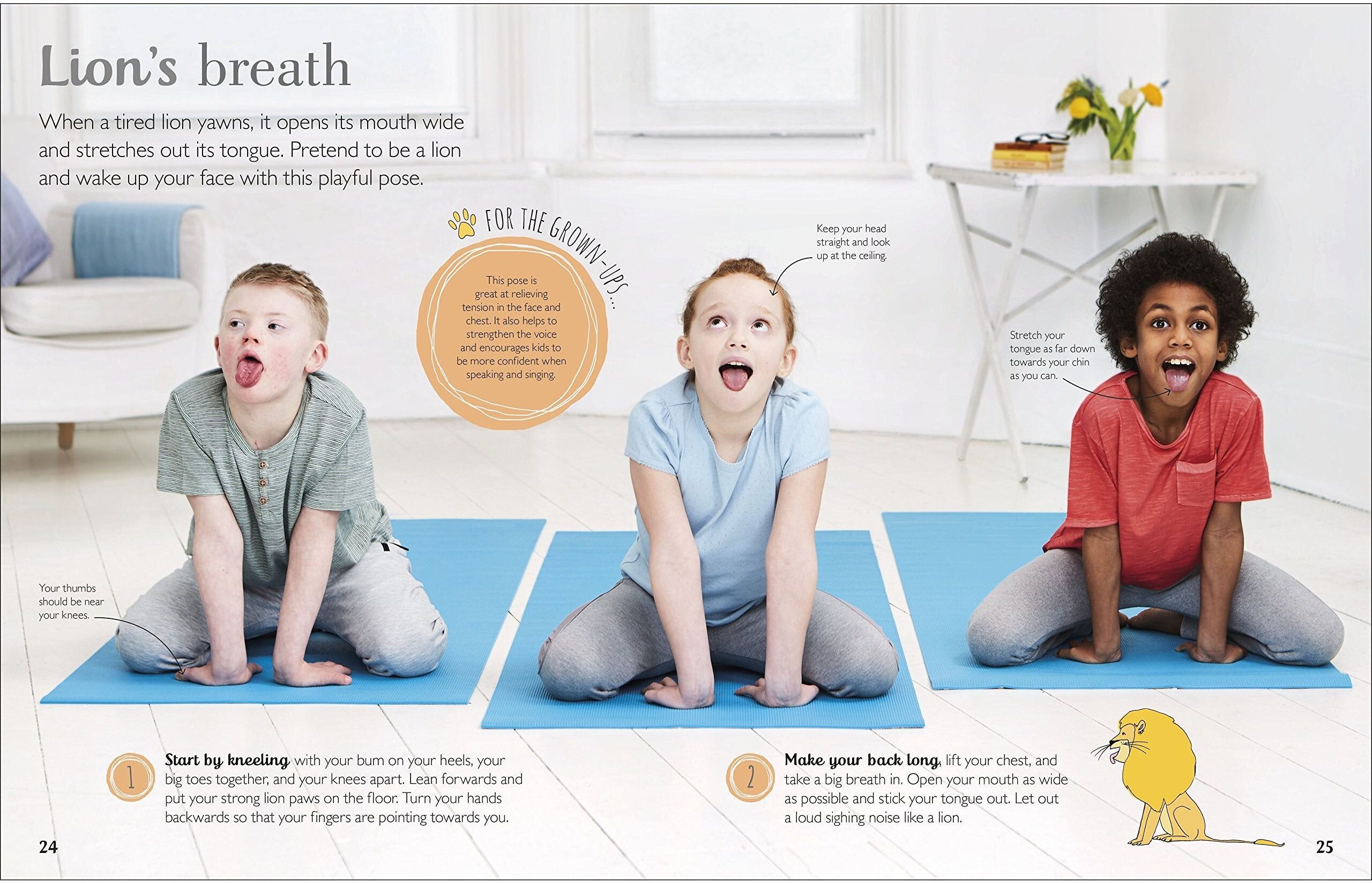
DK Yoga For Kids: Simple First Steps in Yoga and Mindfulness (Mindfulness for Kids) by Susannah HoffmanSimple first steps in yoga and mindfulness for your little one to discover!Yoga for Kids is a great way to teach your children about yoga, mindfulness, meditation and peace - whilst having fun at the same time! This all-encompassing guide includes everything you need to know about yoga for children. Encourage your child's curiosity as they explore simple variations of much-loved yoga poses, from the comfort of your own home!Dive straight in to discover:-Over 25 simple poses and yoga activities to explore-How to achieve maximum mindfulness and fun throughout each activity-Colourful illustrations and photographs showing yoga poses for kids to copy-Higher-level information allows parents to understand and ensure safety behind each poseYoga for Kids aims to teach children all about yoga and mindfulness using a strongly visual approach. Featuring exercises for the parents and children to explore independently or together, whether it's stretching into tree pose, bending into butterfly pose, succeeding with sun salutation or doing downward dog, your child can explore a series of fun and engaging yoga poses that'll keep them entertained for hours! Follow the activities presented in this yoga guide, and your little one can learn how to perfect their poses and become stronger and more confident too!The ideal yoga activity book for 6-9 year olds, this is a must-have volume for children who like moving, learning and bending! Whether you're a parent looking to encourage your child to relax, engage, focus and have fun, or you think your child may be experiencing anxiety and you're looking for a fun and mindful activity the family can enjoy together, this all-encompassing yoga book for children may be calling your name!Children's yoga expert Susannah Hoffman sets out to prove that supporting a child's positive mental health does not need to be expensive, difficult or even time-consuming.With this awe-inspiring activity book, your child can explore yoga poses that will help them de-stress and have fun at the same time!4,99 £*Shipping: 1,99 £Secure redirect to the provider
-
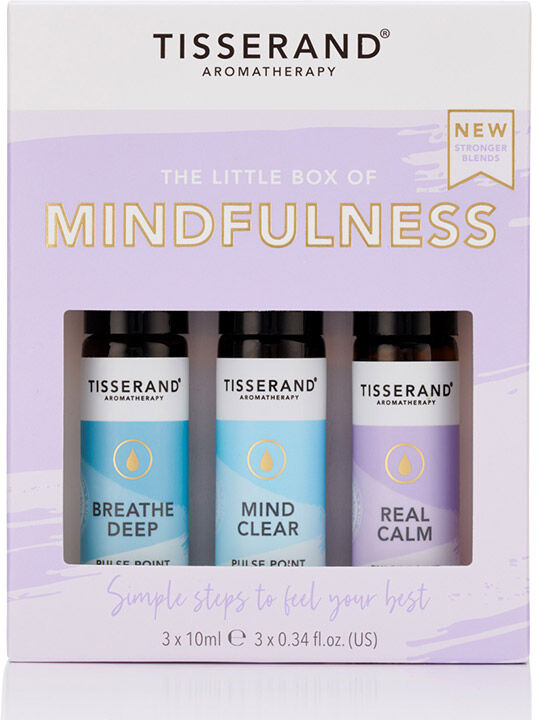
Tisserand Aromatherapy The Little Box of MindfulnessLife moving too fast? Clear your head with the Little Box of Mindfulness, containing expertly crafted three aromatherapy roller balls: • Breathe Deep Pulse Point Roller Ball 10ml • Mind Clear Pulse Point Roller Ball 10ml • Real Calm Pulse Point Roller Ball 10ml Combining orange, petitgrain and coriander essential oils, the Breathe Deep Pulse Point Roller Ball helps give your mind a break when it’s time to slow down and stop. The Mind Clear Pulse Point Roller Ball banishes clouding thoughts and lends clarity, boasting natural essential oils of peppermint, lavender and lemon. With a blend of lavender, bergamot and patchouli, the Real Calm Pulse Point Roller Ball helps restore your sense of tranquillity – perfect for aiding meditation or enhancing a yoga practice. Free from SLES, parabens and synthetic fragrances. Ingredients Breathe Deep Roller Ball: Caprylic/Capric Triglyceride, Citrus Aurantium Dulcis (Orange) Peel Oil, Amyris Balsamifera Bark Oil, Citrus Aurantium Amara (Petitgrain) Leaf/Twig Oil, Coriandrum Sativum (Coriander) Seed Oil, Tocopherol, Limonene*, Linalool*, Citral*, Geraniol*. Mind Clear Roller Ball: Caprylic/Capric Triglyceride, Mentha Piperita (Peppermint) Oil, Lavandula Angustifolia (Lavender) Oil, Picea Mariana (Black Spruce) Leaf Oil, Citrus Aurantifolia (Lime) Peel Oil, Citrus Limon (Lemon) Peel Oil, Origanum Majorana (French Marjoram) Leaf Oil, Anthemis Nobilis, Tocopherol, Limonene*, Linalool*, Citral*, Geraniol*. Real Calm Roller Ball: Caprylic/Capric Triglyceride, Citrus Aurantium Bergamia (Bergamot) Peel Oil, Lavandula Angustifolia (Lavender) Oil, Pogostemon Cablin (Patchouli) Leaf Oil, Pelargonium Graveolens (Geranium) Oil, Tocopherol, Linalool* Limonene*, Citronellol*, Geraniol*, Citral*. *Naturally Occurring Within Essential Oils10,59 £*Shipping: 2,95 £Secure redirect to the provider
-
How do you calculate the sine value of x in a sine function?
To calculate the sine value of x in a sine function, you can use a scientific calculator or mathematical software. Simply input the value of x into the sine function, denoted as sin(x), and the calculator or software will provide you with the corresponding sine value. Alternatively, you can use trigonometric identities or the unit circle to find the sine value of x manually. **
-
Why can the sine in the sine rule not be greater than 1?
The sine in the sine rule cannot be greater than 1 because the sine function has a maximum value of 1. The sine of an angle is defined as the ratio of the length of the opposite side to the length of the hypotenuse in a right-angled triangle. Since the length of the opposite side cannot be greater than the length of the hypotenuse, the sine of an angle cannot be greater than 1. This is a fundamental property of the sine function and is a result of the geometry of right-angled triangles. **
-
How do you determine the sine of alpha and the sine of beta?
The sine of an angle in a right-angled triangle is determined by dividing the length of the side opposite the angle by the length of the hypotenuse. So, to find the sine of alpha, you would divide the length of the side opposite alpha by the length of the hypotenuse. Similarly, to find the sine of beta, you would divide the length of the side opposite beta by the length of the hypotenuse. This can be represented by the formula: sin(alpha) = opposite/hypotenuse and sin(beta) = opposite/hypotenuse. **
-
What is the sine rule?
The sine rule, also known as the law of sines, is a trigonometric formula used to find the missing sides or angles of a triangle. It states that the ratio of the length of a side of a triangle to the sine of the angle opposite that side is constant for all three sides of the triangle. The formula is given as: a/sin(A) = b/sin(B) = c/sin(C), where a, b, and c are the sides of the triangle, and A, B, and C are the angles opposite those sides. The sine rule is particularly useful when dealing with non-right-angled triangles. **
* All prices are inclusive of VAT and, if applicable, plus shipping costs. The offer information is based on the details provided by the respective shop and is updated through automated processes. Real-time updates do not occur, so deviations can occur in individual cases. ** Note: Parts of this content were created by AI.