Buy morganpsychology.eu ?
We are moving the project
morganpsychology.eu .
Are you interested in purchasing the domain
morganpsychology.eu ?
domain@kv-gmbh.de · 0541-91531010
Buy morganpsychology.eu ?
How do you cultivate Sphagnum?
To cultivate Sphagnum, you can start by collecting live Sphagnum moss from a natural habitat or purchasing it from a nursery. Then, you can propagate the moss by dividing it into smaller pieces and placing them in a shallow tray filled with distilled water or rainwater. Make sure to keep the tray in a humid environment with indirect sunlight. Regularly mist the moss to keep it moist and provide it with nutrients by occasionally adding a diluted fertilizer solution. With proper care and maintenance, the Sphagnum moss should continue to grow and spread. **
How do you cultivate basil?
To cultivate basil, start by choosing a sunny location with well-drained soil. Plant the basil seeds or seedlings in the spring after the last frost. Water the basil regularly, keeping the soil consistently moist but not waterlogged. Pinch off the flowers as they appear to encourage leaf growth and prevent the plant from going to seed too soon. Harvest the basil leaves regularly to promote new growth and keep the plant healthy. **


Similar search terms for Cultivate
Top-Angebote
Products related to Cultivate:
-
Handpicked Choices Red Light Therapy Belt Infrared Therapy Wrap For Back Waist Muscle Recovery And Body Wellness blueExperience soothing comfort with this Red Light Therapy Belt, designed to help you relax after long days, intense workouts, or everyday physical strain. Combining 660nm red light and 850nm nearinfrared light, it offers a convenient, handsfree...109,97 $*Shipping: 0,00 $Secure redirect to the provider
-
Sage Green Mindfulness Journal NotebookEnhance your daily reflection with the Sage Green Mindfulness Journal. Designed to encourage positivity and self-awareness, this elegant journal features guided prompts, space for gratitude, and mindful exercises. The soft sage green cover adds a calming touch, while the high-quality pages make writing a pleasure. Perfect for anyone looking to cultivate mindfulness and inner peace in their daily routine.9,00 £*Shipping: 4,99 £Secure redirect to the provider
-
Uplifted Finds Mental Health Awareness Acrylic Sign Psychology Motivational Decor For Counseling, Classroom & Office Mental Health Awareness Acrylic Sign Psychology Motivational Decor For Counseling, Classroom & Office"Foster a culture of resilience and wellness with our Mental Health Gift. This premium psychology motivational decoration is the ultimate designer solution for creating a ""MindfulSanctuary"" or ""PositiveFocus"" atmosphere in any home. Featuring a..."71,97 $*Shipping: 0,00 $Secure redirect to the provider
-
Uplift Essentials Mental Health & Psychology Motivational Sign Inspirational Modern Decor For Counseling & Classroom Corners Mental Health & Psychology Motivational Sign Inspirational Modern Decor For Counseling & Classroom Corners"Synchronize your sanctuary with the highdefinition, highvibration energy of our Psychology Motivational Decoration. Featuring a sophisticated ""mindfulminimalist"" silhouette, this professional plaque is designed to bring a ""calmluxe"" energy to your..."59,97 $*Shipping: 0,00 $Secure redirect to the provider




-
How do you cultivate oleander?
Oleander can be cultivated by planting it in well-drained soil and a location that receives full sunlight. It is important to water the plant regularly, especially during dry periods, but be careful not to overwater as oleander is drought-tolerant. Pruning oleander in the spring can help promote new growth and maintain its shape. Additionally, fertilizing the plant with a balanced fertilizer in the spring and summer can help promote healthy growth and flowering. It is important to note that all parts of the oleander plant are toxic if ingested, so caution should be taken when cultivating and handling it. **
-
How do you cultivate bacteria?
To cultivate bacteria, you can start by preparing a growth medium, which can be agar plates or liquid broth. Then, you can inoculate the medium with a sample containing the bacteria you want to grow, such as a swab from a surface or a sample from a culture. After inoculation, the plates or broth can be incubated at the optimal temperature for the bacteria to grow. Over time, the bacteria will multiply and form visible colonies on the agar plates or cause the liquid broth to become cloudy. **
-
How do you cultivate sunflowers?
To cultivate sunflowers, start by choosing a sunny location with well-drained soil. Plant the sunflower seeds directly into the ground after the last frost, spacing them about 6 inches apart. Water the seeds regularly, keeping the soil consistently moist but not waterlogged. As the sunflowers grow, provide support for the tall stems if needed. Additionally, consider fertilizing the soil with a balanced fertilizer to promote healthy growth. Finally, enjoy watching the sunflowers bloom and provide a beautiful addition to your garden. **
-
How do you cultivate melons?
To cultivate melons, start by preparing well-drained soil with plenty of organic matter. Plant melon seeds or seedlings in a sunny location with plenty of space for the vines to spread out. Water the plants regularly, keeping the soil consistently moist but not waterlogged. Fertilize the plants with a balanced fertilizer throughout the growing season. As the melons start to develop, place a straw or cardboard under each fruit to prevent rot and keep them off the ground. Harvest the melons when they are fully ripe and have a sweet aroma. **

How do you cultivate yeast?
To cultivate yeast, you can start by creating a mixture of warm water, sugar, and flour to create a feeding ground for the yeast. Once the mixture is ready, you can add a small amount of commercial yeast or use natural sources of yeast, such as fruit or grains, to introduce the yeast culture. Then, you can let the mixture sit in a warm, dark place to allow the yeast to grow and multiply. Regular feeding and maintenance of the yeast culture will help it thrive and be ready for use in baking or brewing. **
How can one cultivate hemp?
To cultivate hemp, one needs to start by preparing the soil with proper drainage and a pH level between 6 and 7.5. Hemp seeds should be sown directly into the soil at the right time, which is typically in the spring. The plants need to be spaced out to allow for proper growth and airflow. Hemp requires regular watering, especially during the first 6 weeks of growth. It's also important to monitor for pests and diseases and to provide proper nutrients as needed. Finally, harvesting should take place when the plants are mature, typically around 16 weeks after planting. **
Top-Angebote
Products related to Cultivate:
-
A-Street Prints Cultivate Blue Springtime Blooms WallpaperThis charming floral wallpaper is a contemporary take on blue and white timelessness. Spring's first blooms are painted in a variety of blues accented by white and framed by a pale grey backdrop.97,99 $*Shipping: 0,00 $Secure redirect to the provider
-
Uplifted Goods Laser Therapy Watch For Circulation And Vascular Wellness whiteEnhance your daily wellness routine with this laser therapy watch designed to support healthy blood circulation and overall vascular health. Using gentle low level laser light, it provides a non invasive way to promote better blood flow and oxygen...928,50 $*Shipping: 0,00 $Secure redirect to the provider
-
Handpicked Choices Red Light Therapy Belt Infrared Therapy Wrap For Back Waist Muscle Recovery And Body Wellness blueExperience soothing comfort with this Red Light Therapy Belt, designed to help you relax after long days, intense workouts, or everyday physical strain. Combining 660nm red light and 850nm nearinfrared light, it offers a convenient, handsfree...109,97 $*Shipping: 0,00 $Secure redirect to the provider
-
Sage Green Mindfulness Journal NotebookEnhance your daily reflection with the Sage Green Mindfulness Journal. Designed to encourage positivity and self-awareness, this elegant journal features guided prompts, space for gratitude, and mindful exercises. The soft sage green cover adds a calming touch, while the high-quality pages make writing a pleasure. Perfect for anyone looking to cultivate mindfulness and inner peace in their daily routine.9,00 £*Shipping: 4,99 £Secure redirect to the provider
-
How do you cultivate Sphagnum?
To cultivate Sphagnum, you can start by collecting live Sphagnum moss from a natural habitat or purchasing it from a nursery. Then, you can propagate the moss by dividing it into smaller pieces and placing them in a shallow tray filled with distilled water or rainwater. Make sure to keep the tray in a humid environment with indirect sunlight. Regularly mist the moss to keep it moist and provide it with nutrients by occasionally adding a diluted fertilizer solution. With proper care and maintenance, the Sphagnum moss should continue to grow and spread. **
-
How do you cultivate basil?
To cultivate basil, start by choosing a sunny location with well-drained soil. Plant the basil seeds or seedlings in the spring after the last frost. Water the basil regularly, keeping the soil consistently moist but not waterlogged. Pinch off the flowers as they appear to encourage leaf growth and prevent the plant from going to seed too soon. Harvest the basil leaves regularly to promote new growth and keep the plant healthy. **
-
How do you cultivate oleander?
Oleander can be cultivated by planting it in well-drained soil and a location that receives full sunlight. It is important to water the plant regularly, especially during dry periods, but be careful not to overwater as oleander is drought-tolerant. Pruning oleander in the spring can help promote new growth and maintain its shape. Additionally, fertilizing the plant with a balanced fertilizer in the spring and summer can help promote healthy growth and flowering. It is important to note that all parts of the oleander plant are toxic if ingested, so caution should be taken when cultivating and handling it. **
-
How do you cultivate bacteria?
To cultivate bacteria, you can start by preparing a growth medium, which can be agar plates or liquid broth. Then, you can inoculate the medium with a sample containing the bacteria you want to grow, such as a swab from a surface or a sample from a culture. After inoculation, the plates or broth can be incubated at the optimal temperature for the bacteria to grow. Over time, the bacteria will multiply and form visible colonies on the agar plates or cause the liquid broth to become cloudy. **
Similar search terms for Cultivate
-
Uplifted Finds Mental Health Awareness Acrylic Sign Psychology Motivational Decor For Counseling, Classroom & Office Mental Health Awareness Acrylic Sign Psychology Motivational Decor For Counseling, Classroom & Office"Foster a culture of resilience and wellness with our Mental Health Gift. This premium psychology motivational decoration is the ultimate designer solution for creating a ""MindfulSanctuary"" or ""PositiveFocus"" atmosphere in any home. Featuring a..."71,97 $*Shipping: 0,00 $Secure redirect to the provider
-
Uplift Essentials Mental Health & Psychology Motivational Sign Inspirational Modern Decor For Counseling & Classroom Corners Mental Health & Psychology Motivational Sign Inspirational Modern Decor For Counseling & Classroom Corners"Synchronize your sanctuary with the highdefinition, highvibration energy of our Psychology Motivational Decoration. Featuring a sophisticated ""mindfulminimalist"" silhouette, this professional plaque is designed to bring a ""calmluxe"" energy to your..."59,97 $*Shipping: 0,00 $Secure redirect to the provider
-
DK Yoga For Kids: Simple First Steps in Yoga and Mindfulness (Mindfulness for Kids) by Susannah HoffmanSimple first steps in yoga and mindfulness for your little one to discover!Yoga for Kids is a great way to teach your children about yoga, mindfulness, meditation and peace - whilst having fun at the same time! This all-encompassing guide includes everything you need to know about yoga for children. Encourage your child's curiosity as they explore simple variations of much-loved yoga poses, from the comfort of your own home!Dive straight in to discover:-Over 25 simple poses and yoga activities to explore-How to achieve maximum mindfulness and fun throughout each activity-Colourful illustrations and photographs showing yoga poses for kids to copy-Higher-level information allows parents to understand and ensure safety behind each poseYoga for Kids aims to teach children all about yoga and mindfulness using a strongly visual approach. Featuring exercises for the parents and children to explore independently or together, whether it's stretching into tree pose, bending into butterfly pose, succeeding with sun salutation or doing downward dog, your child can explore a series of fun and engaging yoga poses that'll keep them entertained for hours! Follow the activities presented in this yoga guide, and your little one can learn how to perfect their poses and become stronger and more confident too!The ideal yoga activity book for 6-9 year olds, this is a must-have volume for children who like moving, learning and bending! Whether you're a parent looking to encourage your child to relax, engage, focus and have fun, or you think your child may be experiencing anxiety and you're looking for a fun and mindful activity the family can enjoy together, this all-encompassing yoga book for children may be calling your name!Children's yoga expert Susannah Hoffman sets out to prove that supporting a child's positive mental health does not need to be expensive, difficult or even time-consuming.With this awe-inspiring activity book, your child can explore yoga poses that will help them de-stress and have fun at the same time!4,99 £*Shipping: 1,99 £Secure redirect to the provider
-
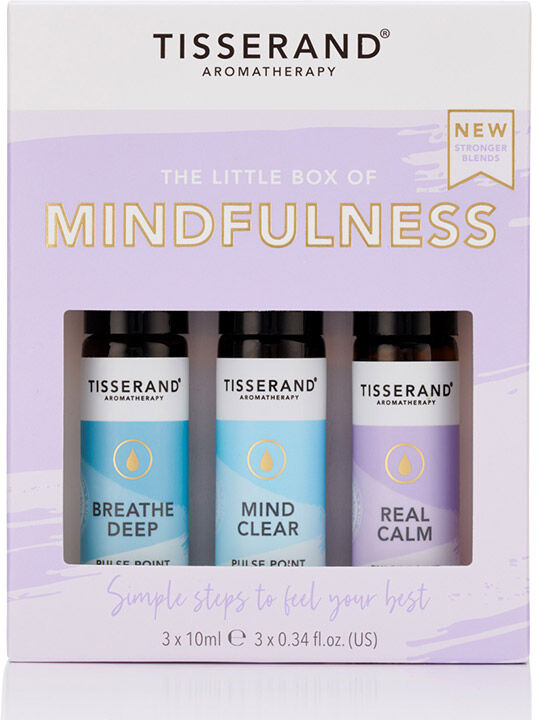
Tisserand Aromatherapy The Little Box of MindfulnessLife moving too fast? Clear your head with the Little Box of Mindfulness, containing expertly crafted three aromatherapy roller balls: • Breathe Deep Pulse Point Roller Ball 10ml • Mind Clear Pulse Point Roller Ball 10ml • Real Calm Pulse Point Roller Ball 10ml Combining orange, petitgrain and coriander essential oils, the Breathe Deep Pulse Point Roller Ball helps give your mind a break when it’s time to slow down and stop. The Mind Clear Pulse Point Roller Ball banishes clouding thoughts and lends clarity, boasting natural essential oils of peppermint, lavender and lemon. With a blend of lavender, bergamot and patchouli, the Real Calm Pulse Point Roller Ball helps restore your sense of tranquillity – perfect for aiding meditation or enhancing a yoga practice. Free from SLES, parabens and synthetic fragrances. Ingredients Breathe Deep Roller Ball: Caprylic/Capric Triglyceride, Citrus Aurantium Dulcis (Orange) Peel Oil, Amyris Balsamifera Bark Oil, Citrus Aurantium Amara (Petitgrain) Leaf/Twig Oil, Coriandrum Sativum (Coriander) Seed Oil, Tocopherol, Limonene*, Linalool*, Citral*, Geraniol*. Mind Clear Roller Ball: Caprylic/Capric Triglyceride, Mentha Piperita (Peppermint) Oil, Lavandula Angustifolia (Lavender) Oil, Picea Mariana (Black Spruce) Leaf Oil, Citrus Aurantifolia (Lime) Peel Oil, Citrus Limon (Lemon) Peel Oil, Origanum Majorana (French Marjoram) Leaf Oil, Anthemis Nobilis, Tocopherol, Limonene*, Linalool*, Citral*, Geraniol*. Real Calm Roller Ball: Caprylic/Capric Triglyceride, Citrus Aurantium Bergamia (Bergamot) Peel Oil, Lavandula Angustifolia (Lavender) Oil, Pogostemon Cablin (Patchouli) Leaf Oil, Pelargonium Graveolens (Geranium) Oil, Tocopherol, Linalool* Limonene*, Citronellol*, Geraniol*, Citral*. *Naturally Occurring Within Essential Oils10,59 £*Shipping: 2,95 £Secure redirect to the provider
-
How do you cultivate sunflowers?
To cultivate sunflowers, start by choosing a sunny location with well-drained soil. Plant the sunflower seeds directly into the ground after the last frost, spacing them about 6 inches apart. Water the seeds regularly, keeping the soil consistently moist but not waterlogged. As the sunflowers grow, provide support for the tall stems if needed. Additionally, consider fertilizing the soil with a balanced fertilizer to promote healthy growth. Finally, enjoy watching the sunflowers bloom and provide a beautiful addition to your garden. **
-
How do you cultivate melons?
To cultivate melons, start by preparing well-drained soil with plenty of organic matter. Plant melon seeds or seedlings in a sunny location with plenty of space for the vines to spread out. Water the plants regularly, keeping the soil consistently moist but not waterlogged. Fertilize the plants with a balanced fertilizer throughout the growing season. As the melons start to develop, place a straw or cardboard under each fruit to prevent rot and keep them off the ground. Harvest the melons when they are fully ripe and have a sweet aroma. **
-
How do you cultivate yeast?
To cultivate yeast, you can start by creating a mixture of warm water, sugar, and flour to create a feeding ground for the yeast. Once the mixture is ready, you can add a small amount of commercial yeast or use natural sources of yeast, such as fruit or grains, to introduce the yeast culture. Then, you can let the mixture sit in a warm, dark place to allow the yeast to grow and multiply. Regular feeding and maintenance of the yeast culture will help it thrive and be ready for use in baking or brewing. **
-
How can one cultivate hemp?
To cultivate hemp, one needs to start by preparing the soil with proper drainage and a pH level between 6 and 7.5. Hemp seeds should be sown directly into the soil at the right time, which is typically in the spring. The plants need to be spaced out to allow for proper growth and airflow. Hemp requires regular watering, especially during the first 6 weeks of growth. It's also important to monitor for pests and diseases and to provide proper nutrients as needed. Finally, harvesting should take place when the plants are mature, typically around 16 weeks after planting. **
* All prices are inclusive of VAT and, if applicable, plus shipping costs. The offer information is based on the details provided by the respective shop and is updated through automated processes. Real-time updates do not occur, so deviations can occur in individual cases. ** Note: Parts of this content were created by AI.